Peptide Skincare Ingredient Glossary
Plain-English guide to the ingredients in peptide skincare and haircare: Copper Tripeptide-1, Snap-8, KPV, niacinamide, caffeine, biotin and more.
The peptides
Peptides are short chains of amino acids, the same building blocks that make up the proteins in skin and hair. On a label they usually appear under precise INCI names, and those names are worth learning, because "peptide complex" on the front of a bottle tells you very little. These are the ones you will meet most often.
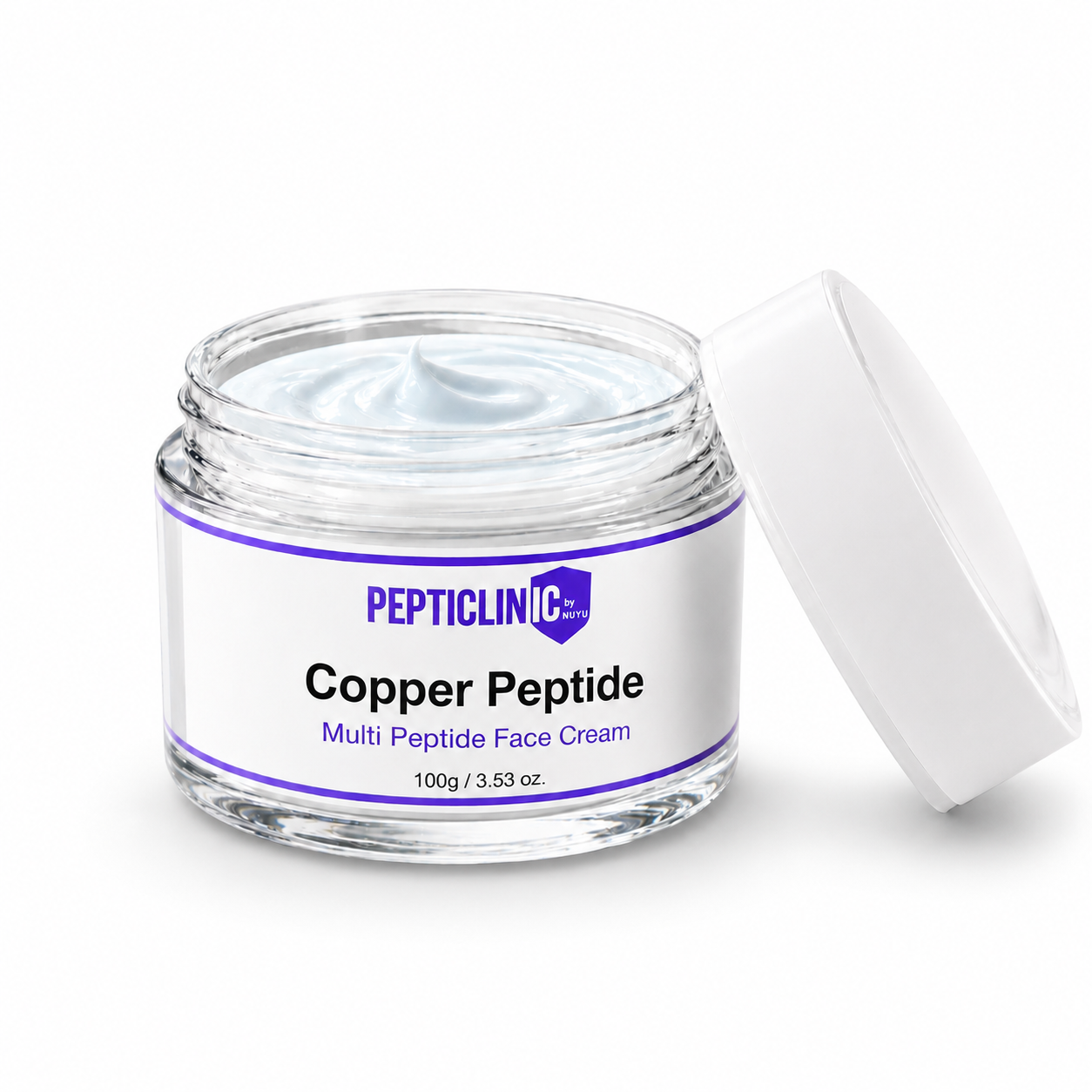
Copper Tripeptide-1. Three amino acids bound to a copper ion, and the reason so many peptide serums have a soft blue tint. It is a skin-conditioning ingredient with decades of cosmetic use behind it, prized for supporting a firmer, smoother, more rested look with daily use. Gentle enough for morning and night, it is one of the friendliest actives to start with. We cover it in depth in our copper peptide guide.
Acetyl Octapeptide-3 (Snap-8). An eight amino acid peptide best known by its trade name, Snap-8. It appears in formulas aimed at the look of expression lines, the little creases around the eyes and forehead that come from smiling and frowning. In a well-made serum it supports a smoother, softer-looking surface in those areas. More detail in our Snap-8 guide.
KPV. A tripeptide of lysine, proline and valine that turns up in formulas designed for skin that looks reactive or easily flushed. As a cosmetic ingredient it is used to support a calm, comfortable, even-looking complexion, and it layers happily with the gentler hydrators below. Our KPV barrier-care guide walks through where it fits in a routine.
ATP3 (adenosine triphosphate). A conditioning ingredient you will sometimes see paired with copper peptides in density-look serums for skin and scalp. In cosmetic formulas it plays an energising, conditioning role, part of the supporting cast that helps skin and hair look fresh and cared for rather than a headline act on its own.
The hydrators
Hydrators are the quiet workhorses of nearly every formula. They are rarely on the front of the bottle, but they do a great deal of the day-to-day work of keeping skin looking plump and feeling comfortable.
Glycerin. A humectant, meaning it draws water toward the surface of the skin. It is inexpensive, dependable and everywhere, and that is a compliment: a formula built on glycerin tends to leave skin feeling soft and looking dewy without any fuss. If it sits high on an ingredient list, that is usually a good sign.
Hyaluronic acid.Despite the word "acid", this is a hydrator, not an exfoliant. It holds many times its weight in water, which is why serums that feature it leave skin looking plumper and finer lines looking softened while the skin stays well hydrated. It pairs beautifully with peptides, and you will often find the two in the same bottle.
Panthenol (pro-vitamin B5). A conditioning humectant with a silky, cushioned feel. It is a favourite in formulas for skin that looks reactive, and it appears in haircare too, where it helps lengths feel smoother and look glossier. On a label it may read as panthenol or D-panthenol.
Scalp and hair regulars
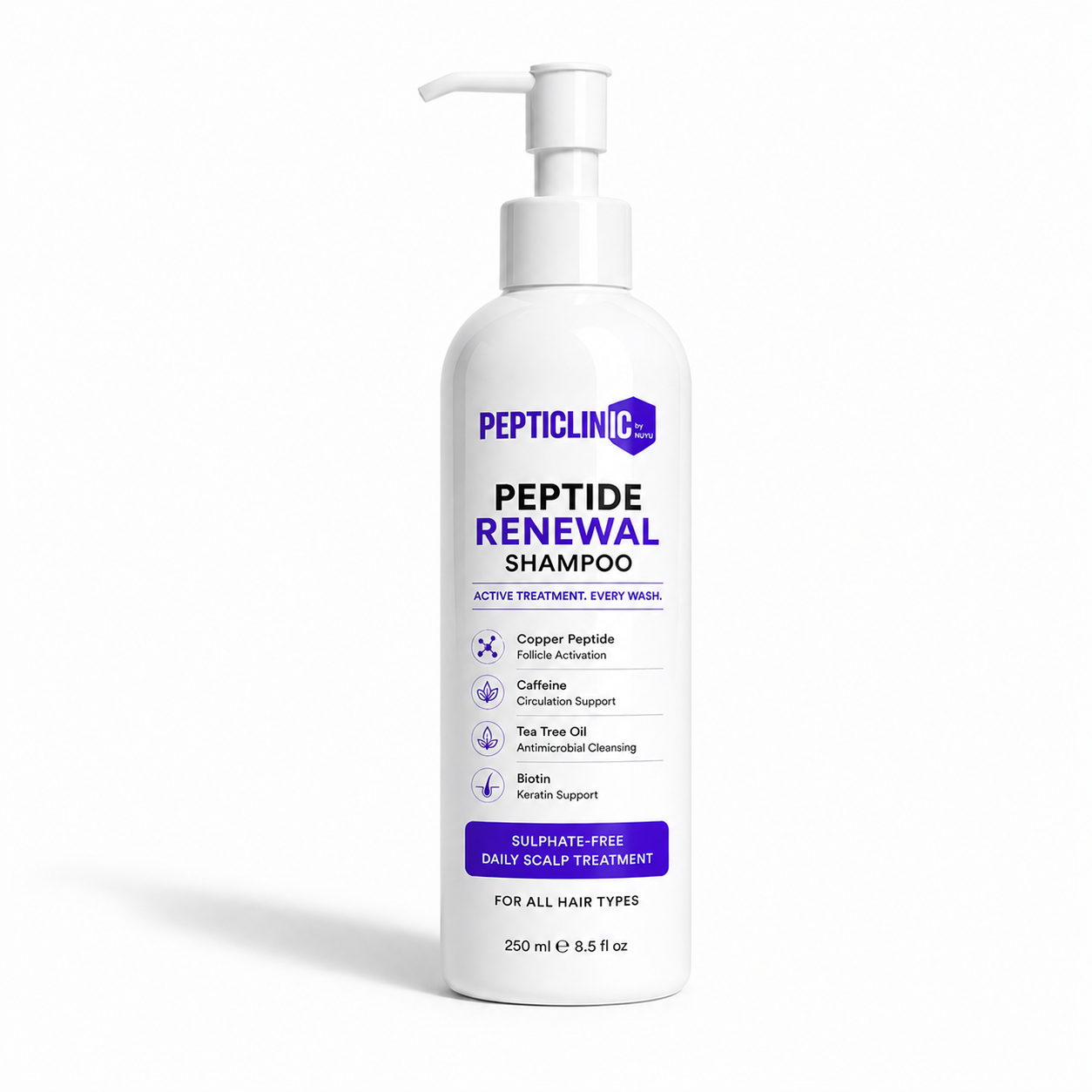
Scalp care borrows a lot from skincare, and the ingredient lists overlap more than you might expect. These are the names that come up again and again in peptide shampoos, conditioners and scalp serums, covered in more depth in our peptide shampoo and conditioner guide.
Caffeine. The same molecule as in your flat white, used here as a cosmetic conditioning ingredient. In scalp formulas it is popular for a fresh, awake-looking finish, and in eye creams it is used around the look of puffiness. It rinses out easily and plays well with almost everything.
Biotin. A B vitamin that appears in many haircare formulas as a conditioning ingredient. In a shampoo or conditioner it is there to support hair that feels softer and looks glossier and fuller. It is a supporting player, so judge the whole formula rather than the biotin alone.
Saw palmetto. A plant extract that appears in scalp-care formulas. You will see it listed among the botanical ingredients in some scalp serums and shampoos, usually alongside caffeine and peptides.
Menthol and peppermint. These are all about the feel. A trace of menthol or peppermint oil gives a scalp formula that cool, tingly, just-washed sensation. It is purely sensory, and some people love it while others with a reactive-looking scalp prefer to skip it, so check the list if tingling is not your thing.
Tone and texture
Niacinamide. A form of vitamin B3 and one of the best-mannered actives in skincare. It is used to support an even-looking tone, refined-looking pores and a comfortable, balanced feel, and it layers with nearly anything, peptides included. Two to five percent is the range most formulas sit in, and more is not automatically better.
Vitamin C. Ascorbic acid is the classic form, loved for a brighter, fresher-looking complexion, though it can feel lively on reactive-looking skin and it degrades when poorly packaged. Derivatives such as sodium ascorbyl phosphate and ascorbyl glucoside are gentler and more stable, trading a little punch for a lot of ease. If you use a strong vitamin C, keep it in the opposite part of the day to a copper peptide.
Exfoliating acids. Glycolic, lactic and salicylic acid all work on texture: used sensibly, they leave skin looking smoother, brighter and more even by helping lift away dull-looking surface cells. They are the strong personalities of a routine, so introduce one at a time, use them a few nights a week rather than daily, and keep them away from the same layer as your peptides.
How to read a label like a formulator
INCI lists are ordered by concentration, from most to least, down to the one percent mark, below which ingredients can appear in any order. So the first five or six names tell you what the product mostly is, and anything sitting after the preservatives is present in small amounts. Neither fact is damning on its own: many actives, peptides included, do their cosmetic job at low percentages, so a peptide near the end of a list is normal rather than a red flag.
That is also why concentration folklore deserves some scepticism. A bigger number on the front of the bottle is marketing shorthand, not a promise of a better result, and past a point higher percentages mostly buy you a higher chance of a cranky-feeling face. A sensible dose in a well-built formula beats a heroic dose in a poor one.
Watch for the gap between marketing names and INCI names. "Snap-8" is a trade name; the label must say Acetyl Octapeptide-3. "Pro-vitamin B5" is panthenol. If the front of the pack boasts an ingredient the INCI list does not actually name, a little scepticism is warranted: you cannot verify what you cannot find. And if your skin tends to look reactive, favour short lists with few fragrances and one or two actives, so when your skin looks calmer and smoother you know exactly which product earned the credit.
Frequently asked questions
What should I look for on an ingredient list?
Start with the INCI names of the actives you care about, such as Copper Tripeptide-1 or Acetyl Octapeptide-3, then check the supporting cast: humectants for hydration, conditioning agents for feel, and a formula free of anything your skin dislikes.
Are more ingredients better?
No. A short, well-chosen formula is often easier on skin that looks reactive, and it makes it obvious which product is responsible when your skin looks better. Pick a few actives and give them time.
Why do brands use INCI names?
INCI is the international naming standard for cosmetic ingredients, so the same substance reads the same way on every label worldwide. It is the easiest way to compare two products honestly.