KPV and Barrier Care: Calming Reactive-Looking Skin
What the KPV tripeptide is, why it appears in barrier-care serums, and a simple routine for skin that looks red, tight or reactive.
What KPV is
KPV is a tripeptide: three amino acids (lysine, proline and valine) joined in a short chain. The name is simply the single-letter shorthand for those three building blocks, which is why you will see it written as KPV on an ingredient list rather than a long chemical name. Like other cosmetic peptides, it is a small, water-friendly molecule that slots easily into serums and lightweight lotions.
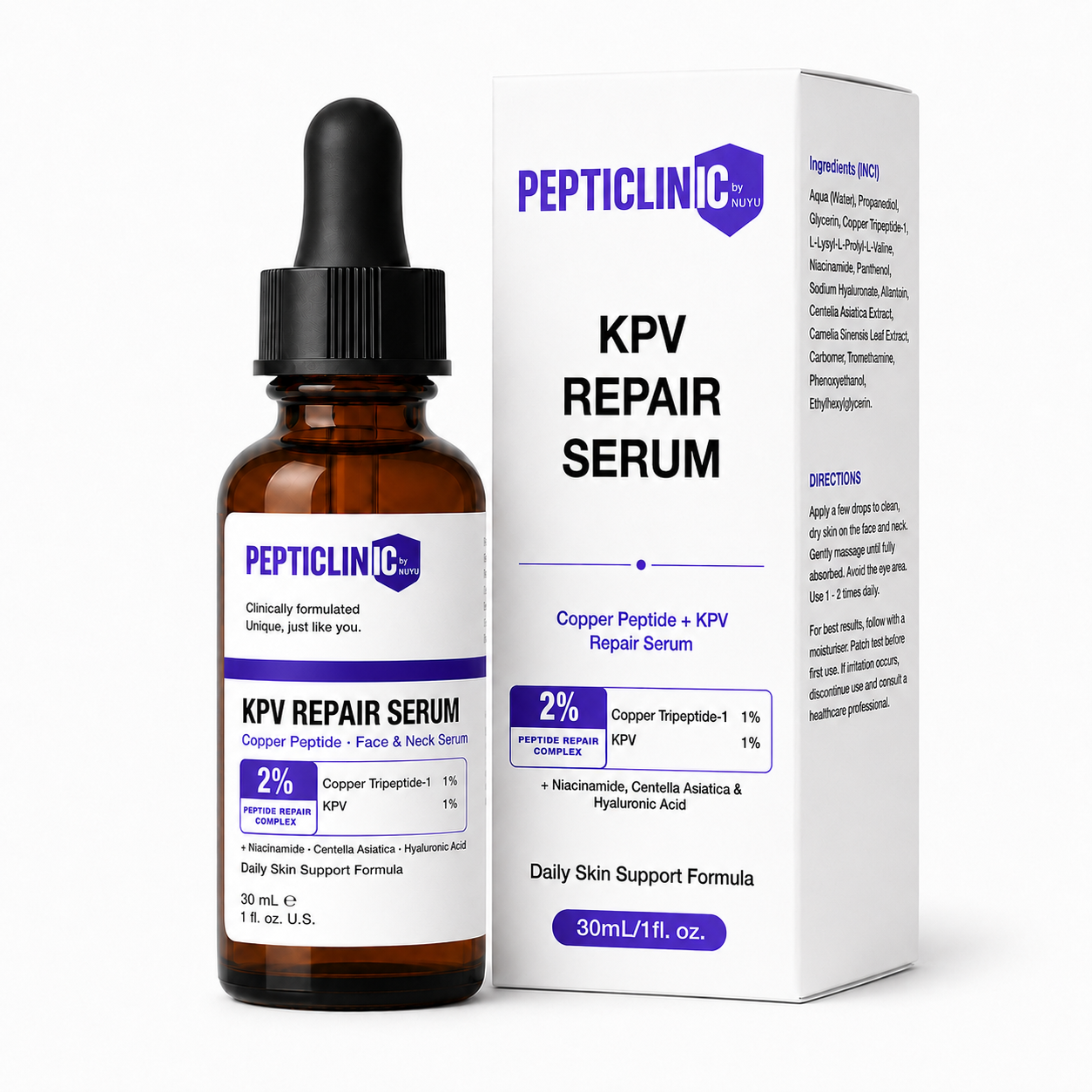
Compared with old favourites like Copper Tripeptide-1, KPV is a newer arrival in cosmetic formulas, and you will mostly find it in products aimed at comfort. In a serum it plays a skin-conditioning role: it is chosen for skin that looks red, feels tight, or seems to react to everything, where the goal is a calmer-looking, more comfortable-feeling complexion rather than any single dramatic change.
It helps to be honest about what that means. KPV is a cosmetic ingredient, so everything it offers is about how skin looks and feels. If your skin has an ongoing concern that worries you, that is a conversation for a professional, not a serum. For everyday reactive-looking skin, though, comfort-focused peptides like KPV are exactly the sort of quiet, gentle ingredient a barrier-care routine is built around.
Your skin barrier, in plain English
Your skin barrier is the outermost layer of your skin. Picture a brick wall: skin cells are the bricks, and the natural fats between them are the mortar. Its job is beautifully simple. It holds water in, and it keeps the outside world out, from wind and hot showers to fragrance and the ambitious ten-step routine you tried last month.
You can read the state of that wall in the mirror. A happy barrier looks smooth and even, feels soft and comfortable, and takes new products in its stride. Makeup sits well on it, and a change in weather does not send it into a sulk. It is the "my skin but on a good day" look that most routines are quietly chasing.
An unhappy barrier tells on itself just as clearly. Skin feels tight after cleansing, looks flushed by the afternoon, and turns rough-textured in patches. Products that used to feel like nothing suddenly sting on application, and moisturiser seems to vanish within the hour. None of this is a diagnosis; it is simply your skin looking and feeling thirstier and more reactive than usual, and it is the cue to switch from ambitious mode to barrier-care mode.
Barrier care basics
The foundations of barrier care are almost boring, which is rather the point. Start with a gentle cleanser: cream, milk or a mild gel, lukewarm water, no squeaky-clean finish. If your face feels tight the moment you towel off, the cleanser is doing too much, and everything you layer afterwards is working uphill.
Next, humectants. Glycerin, hyaluronic acid and panthenol draw water into the surface of the skin and keep it looking plump and dewy. They are inexpensive, widely available and extremely well tolerated, which makes them the workhorses of any comfort-first routine. Seal them in with a simple moisturiser and you have covered most of what reactive-looking skin actually wants.
Then there is what you leave out. Over-exfoliating is the fastest way to end up with tight-feeling, flushed-looking skin, so when things look reactive, shelve the acids and scrubs for a few weeks and let your skin be. Finish every morning with sunscreen, because daily sun protection does more for an even, smooth-looking complexion than any serum. Simplicity is not a compromise here; it is the strategy.
Where KPV fits in a routine
KPV lives in the serum step: after cleansing, before moisturiser. Apply a few drops to clean, dry skin, give it a minute to settle, then follow with your moisturiser and, in the morning, sunscreen. That is the whole ritual, morning and night, and it slots into even the most minimal routine without any layering gymnastics.
You will often find KPV formulated alongside Copper Tripeptide-1 in a single serum, and the pairing makes sense: one peptide chosen for comfort, the other a long-studied skin conditioner for a firmer, smoother look. They share the same gentle temperament, so there is no need to keep them in separate parts of the day. If copper peptides are new to you, our guide to copper peptides in skincare covers that side of the bottle in detail.
Who tends to reach for KPV? People whose skin flushes easily, looks reactive for a day or two after strong actives, or simply feels tight and grumbly through winter. It suits anyone wanting a comfort-first serum while they rebuild a gentler routine. As with any new cosmetic, patch test first: apply a little to the inner forearm once a day for a few days, and only move to the face if all stays calm and comfortable.
Keeping it simple
Reactive-looking skin loves short ingredient lists. A cleanser, a comfort-focused serum, a moisturiser and a sunscreen is a complete routine, and every product you add beyond that should earn its place. When you are comparing labels, fewer names is usually the safer bet, and a quick look through our ingredient glossary will demystify the ones that remain.
Add one new product at a time and give it a fair run before you judge it. Two to three weeks is enough to know whether something agrees with your skin; eight to twelve weeks of consistent use is the honest window for judging the look of the results. Take a photo in the same light each fortnight and let the mirror, not the marketing, tell you what is working. Calm-looking skin is rarely built in a weekend, but a simple, steady routine gets there with far less drama.
Frequently asked questions
What is KPV in skincare?
KPV is a three-amino-acid peptide (lysine-proline-valine) used in cosmetic serums for skin that looks red, tight or reactive. In a formula it plays a comfort role: supporting the look and feel of a calm, balanced complexion.
What does "barrier care" actually mean?
Your skin barrier is the outermost layer that holds moisture in and keeps the outside world out. Barrier care means choosing gentle cleansers, humectants and soothing ingredients so that layer stays comfortable and the skin looks smooth and even.
Can I combine KPV with copper peptides?
Yes. KPV and GHK-Cu (Copper Tripeptide-1) sit comfortably in the same routine and are often combined in one serum. Layer them with a simple moisturiser and daily sunscreen for a routine that stays gentle.