GHK-Cu Copper Peptides for Hair and Scalp: A Routine Guide
A simple scalp-care routine with GHK-Cu (Copper Tripeptide-1): serums, sprays and washing habits for the look of fuller, denser-looking hair.
Why scalp care is skincare
Here is the simplest reframe in hair care: your scalp is skin. It has the same layers, the same oil glands, the same need for gentle cleansing and a bit of conditioning as the skin on your face. Yet most of us give it nothing beyond a quick lather in the shower, then wonder why our hair never quite looks the way we want it to. Every strand you can see starts at the scalp, so the surface underneath deserves the same care you give your cheeks and forehead.
A scalp routine looks a lot like a face routine, just relocated. There is a cleansing step (your shampoo), a conditioning step, and, if you want to go further, a leave-on step: a serum or spray with actives chosen for the scalp. That last step is where copper peptides come in, and it is the part most people have never tried. None of it is complicated, and none of it takes more than a few minutes a day.
The payoff of thinking this way is that all your skincare instincts transfer. Patch test new products. Be consistent rather than heavy-handed. Judge results over weeks, not days. If you already run a simple face routine, you have every skill a scalp routine asks for.
What copper peptides do for hair and scalp
Copper Tripeptide-1 is the same blue-tinted peptide that shows up in facial serums, and on the scalp it plays the same role: it is a skin-conditioning ingredient. A well-conditioned scalp is comfortable, balanced and a good base for hair to sit on, in the same way that well-conditioned facial skin is a good base for makeup.
What people are usually chasing, though, is the look of the hair itself. Used consistently, a copper peptide scalp routine is about the appearance of fuller, denser-looking hair: strands that look like they have more body, partings that look less sparse, an overall impression of thickness when you catch yourself in a mirror or a photo. If the appearance of thinning is what brought you here, this is the honest framing: we are talking about how your hair and scalp look and feel, and cosmetic results vary from person to person.
Expectations matter even more on the scalp than on the face. Hair changes slowly, so give a routine a few months of consistent use before you judge it, and judge it on photos taken in the same light rather than memory. Copper Tripeptide-1 belongs firmly in the slow-and-steady family: gentle enough for daily use, with a payoff measured in seasons rather than days. If a product promises a dramatic difference by the weekend, be sceptical of the product, not of your scalp.
Serum or spray
Copper peptide scalp products usually come in two formats, and the ingredients inside are often near-identical. The choice is really about how you like to apply things.
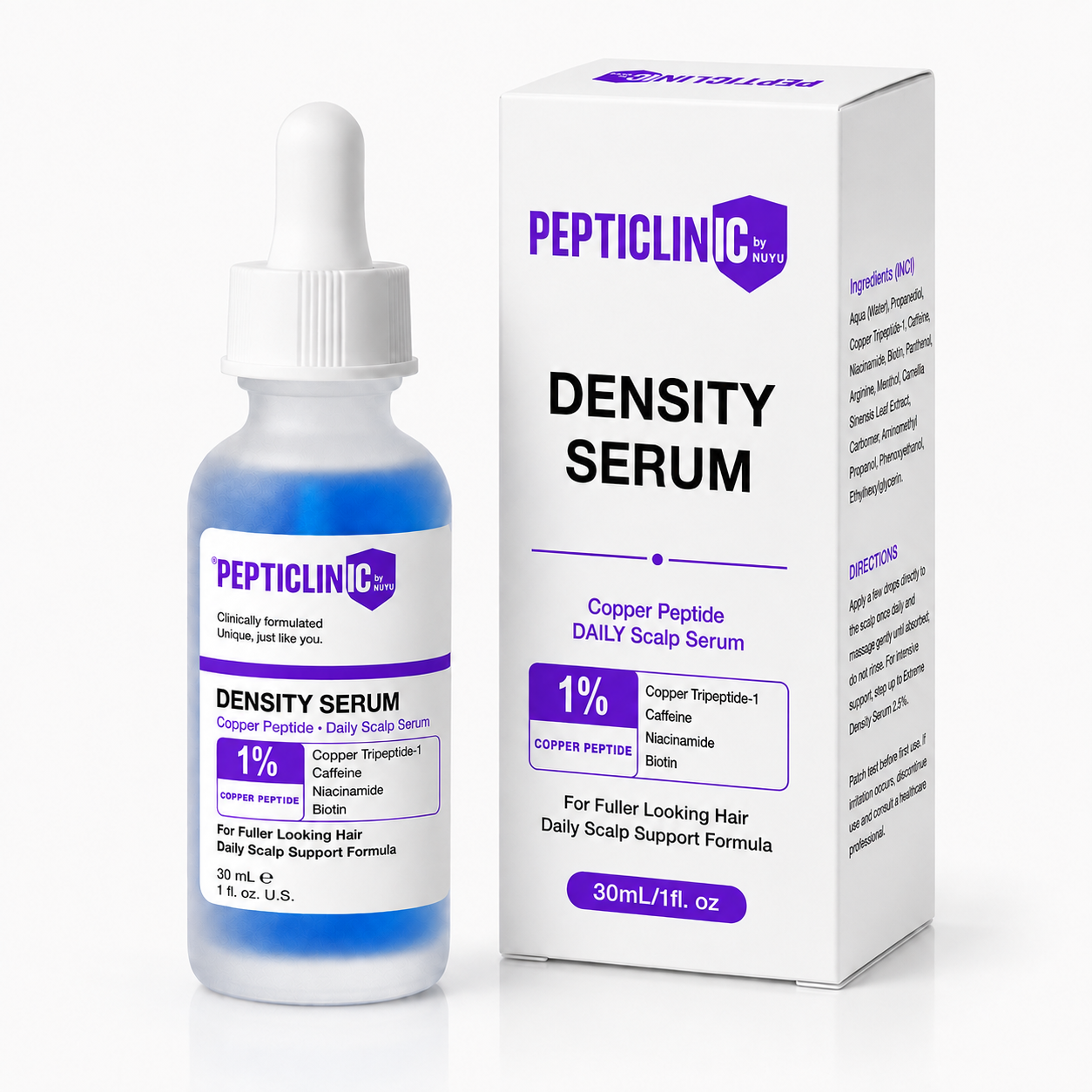
A dropper serum gives you precision. You part the hair, place a few drops directly along the parting or over the areas you care most about, and massage it in. It suits people focused on visible partings, the hairline, or the crown, and it wastes very little product because every drop lands where you aimed it.
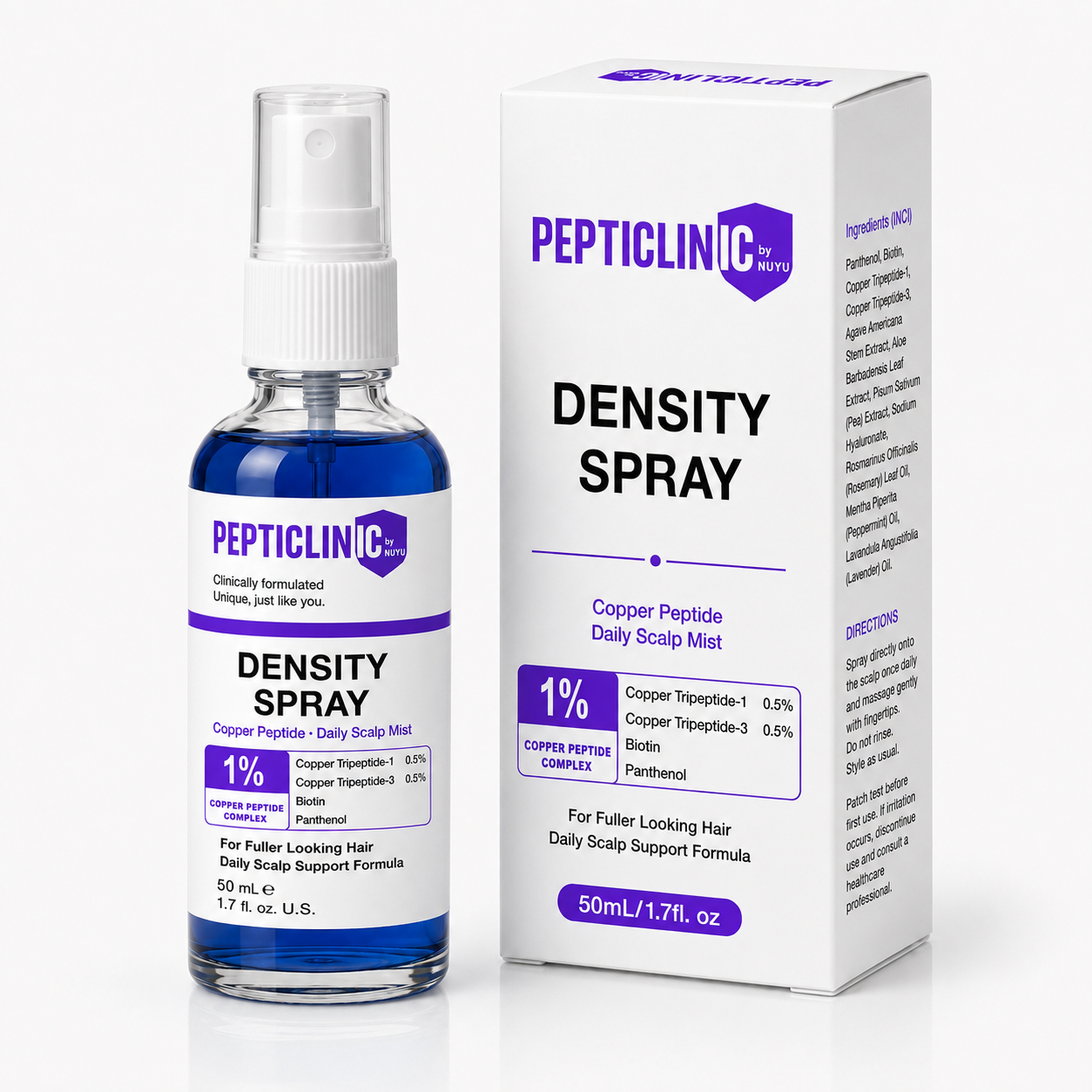
A spray gives you coverage. A few spritzes across sectioned hair reaches a wide area quickly, which suits thicker hair, larger areas, or anyone who finds a dropper fiddly first thing in the morning. The trade-off is a little less precision and a little more product landing on the hair itself, which is harmless but not where the formula does its conditioning work.
If you are torn, choose by habit rather than theory. The best format is the one you will actually reach for every day, because with copper peptides consistency beats everything else. Some people run both: serum along the parting at night, spray for general coverage after a morning wash.
The routine, step by step
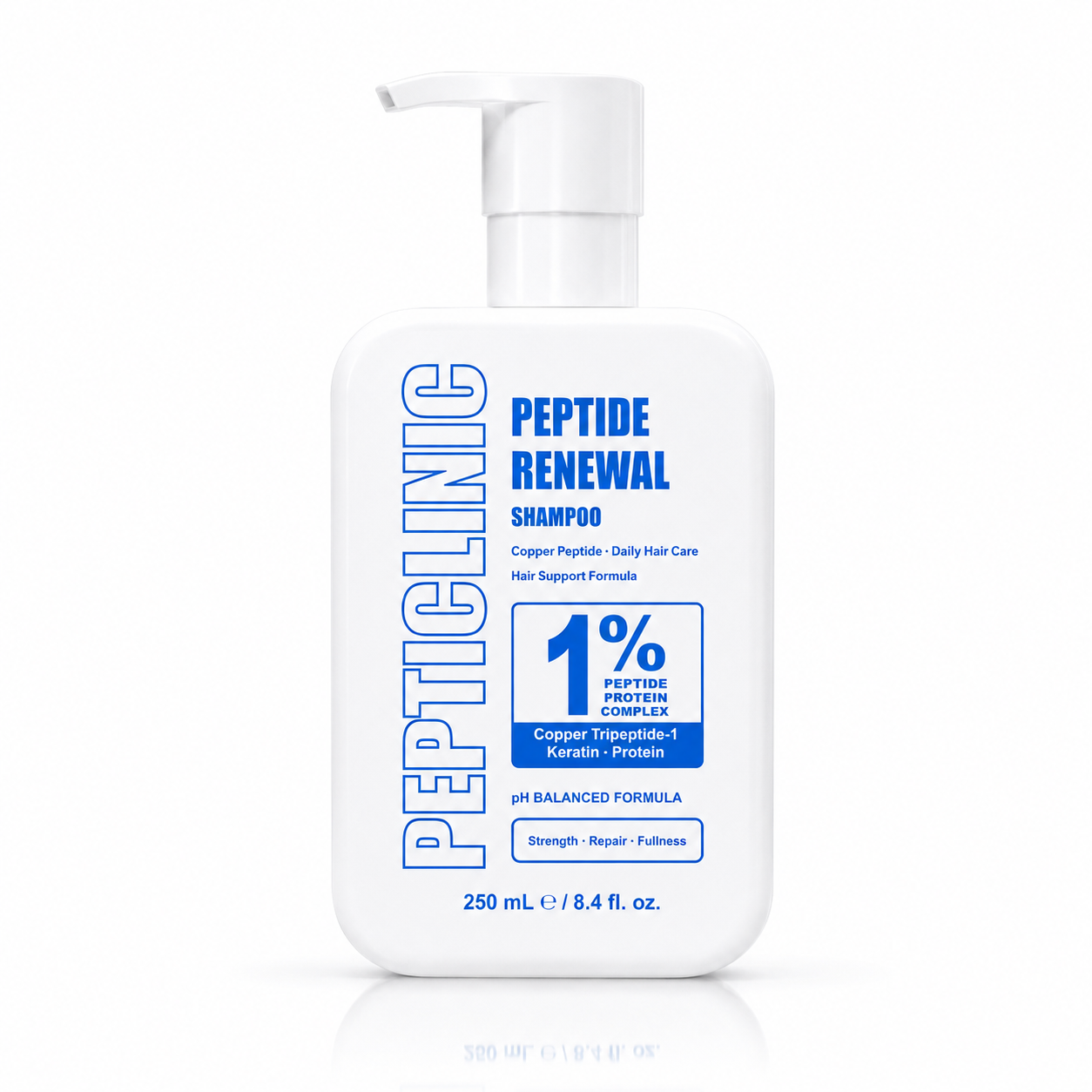
On wash days, start with a gentle shampoo and conditioner. Harsh cleansing works against everything a leave-on serum is trying to do, so pick a shampoo that leaves your scalp comfortable rather than squeaky, and condition from the mid-lengths down. If you want your wash-day products working in the same direction as your serum, our peptide shampoo and conditioner guide covers what to look for on the label.
The leave-on step is the heart of the routine. On towel-dried or dry hair, part the hair into sections so you can see the scalp, then apply your serum or spray section by section. Massage briefly with fingertips, not nails, using small circles for thirty seconds or so. The massage feels good, and it spreads the product evenly across the skin instead of leaving it pooled along one parting.
Frequency: daily or every second day is the usual rhythm, and either is fine. There is no need to wash the product out, and once it has settled in for a few minutes you can style exactly as you normally would. Most formulas are lightweight and disappear into the hair; if yours leaves a residue that bothers you, apply at night instead and let it work while you sleep.
That is the whole routine: gentle wash days, a leave-on copper peptide step, a short massage, and patience. If you want to understand any of the supporting ingredients on your labels, the ingredient glossary walks through the usual suspects.
Tracking progress honestly
Hair plays tricks on memory. Day to day it looks the same, and a bad hair morning can convince you nothing is working when plenty is. The fix is boring and effective: photos, taken every few weeks, under the same light, from the same angles. Front, crown from above, and your usual parting are the three shots most people find useful. Same bathroom, same time of day, hair dry and unstyled.
When you compare, look at the things a cosmetic routine can actually change: how much body the hair seems to have, how full the parting looks, whether the overall impression is denser-looking than the earlier photo. Resist the urge to zoom in on a single spot; the look of fullness is a whole-head impression, and that is how other people see you too.
Give it a fair run of a few months before you decide anything, keep the routine steady while you are judging it, and change one thing at a time so you know what made the difference. A scalp routine is a quiet habit, not a project. Done consistently, it is one of the easier wins in the whole "your scalp is skin" way of thinking.
Frequently asked questions
What does a copper peptide scalp serum do?
It delivers Copper Tripeptide-1 directly to the scalp, where it conditions the skin and supports the look of fuller, denser-looking hair over time. Think of it like skincare for your scalp: a leave-on step you apply to clean, towel-dried or dry hair.
Serum or spray: which should I choose?
They carry similar ingredients in different formats. A dropper serum suits targeted application along visible partings; a spray covers larger areas quickly and suits thicker hair. Many people start with whichever fits their routine and switch formats later.
How often should I apply a scalp serum?
Daily or every second day is the usual rhythm. Consistency over months matters far more than the occasional double dose, and most people take a progress photo every few weeks under the same light to track how their hair looks.
Do I need to wash it out?
No. Scalp serums and sprays are leave-on products. Apply to the scalp in sections, massage briefly with fingertips, and style as normal once it settles in.